Eric Temfack · Author & digital strategist
History illuminates
History illuminates
strategy.
African histories offer fresh perspectives on power. Explore them through 50 Hidden Laws of African Power, the portraits and reflections of Eric Temfack.

of African Power French & English · Print & digital
50 lawsA framework for reflection
2 languagesFrench & English
3 formatsPaperback, hardcover & Kindle
01 / The book
Laws of power.
Questions of responsibility.
50 Hidden Laws of African Power.
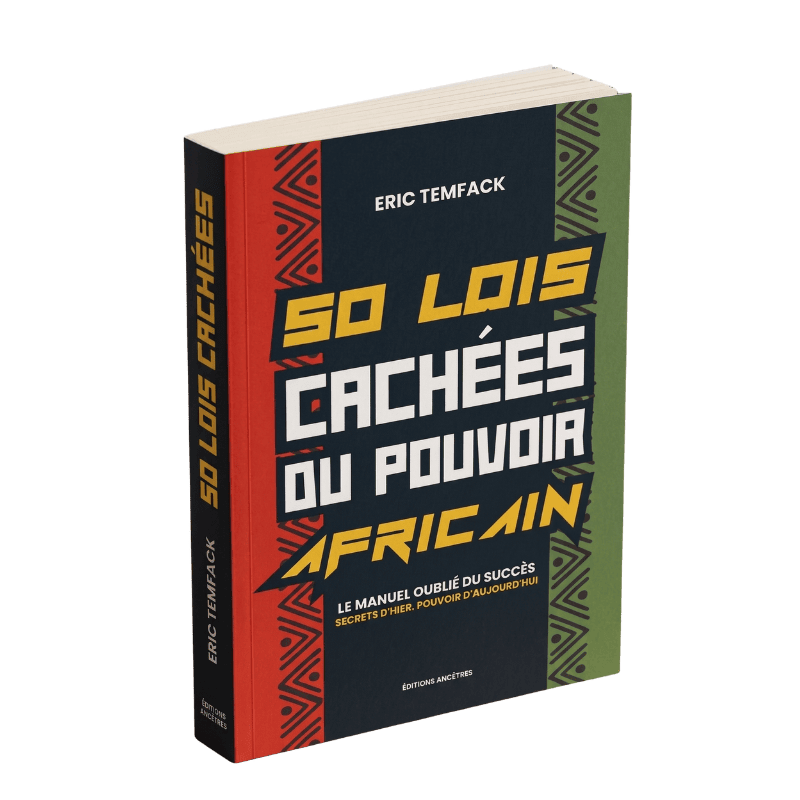
Eric Temfack explores African history through fifty principles of power and strategy. The book brings historical lives into dialogue with contemporary leadership situations.
A framework to discuss, contextualise and test against the facts, rather than a universal formula or a claim that there is one single African model.
Read the context
Place each historical life within its era and constraints.
Question power
Examine institutions, narratives and balances of power.
Think about action
Consider what can be applied today, and what cannot.
02 / The editions
For every reader,
For every reader,
an edition.
To annotate, give as a gift or take with you. Explore the available formats in French and English.


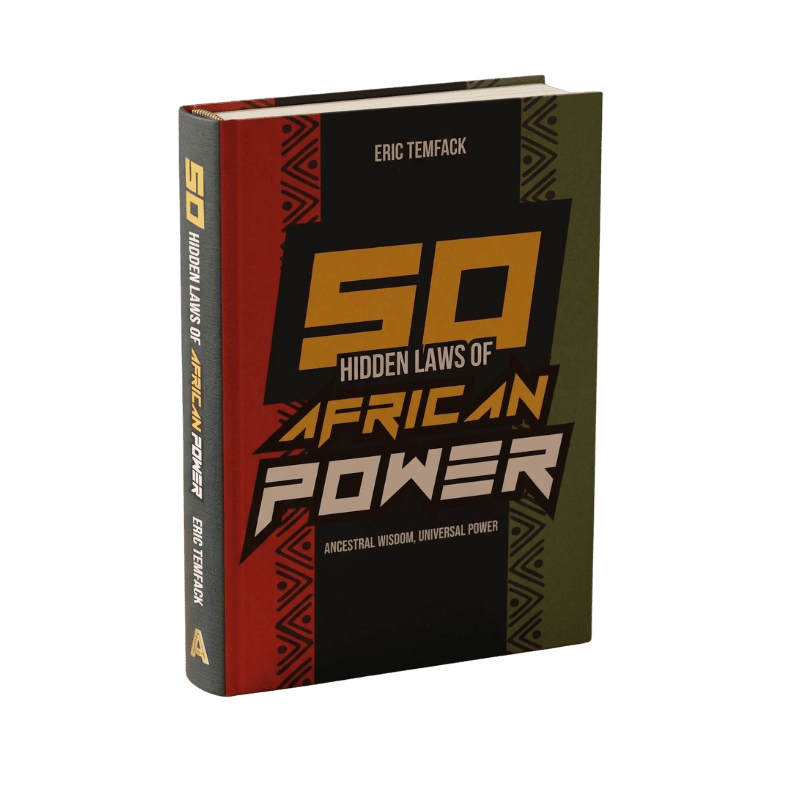

These links open Amazon product listings. Prices, delivery and availability are provided by the seller.
03 / A selection of portraits
Historical lives.
Historical lives.
Not flawless role models.
Exploring a strategy does not mean endorsing everything a historical figure did. These portraits invite readings grounded in their context.
Living languages · African cultures
Parle-moi.
Parle-moi.
Words that bring us closer.
5 destinationsFrench-language guidesBy Eric Temfack
Travel, reconnect with your roots, understand a joke or join a conversation: the “Parle-moi” collection explores everyday expressions and the cultures that give them life. Accessible, humorous and instructive French-language guides for travellers, the diaspora and curious readers.
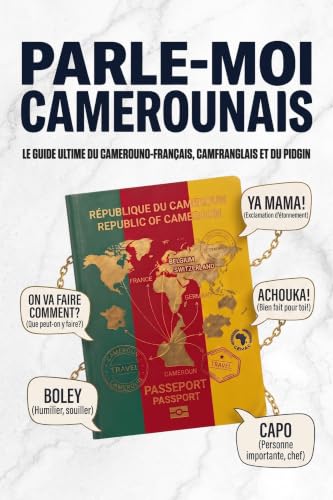
Cameroon
Parle-moi camerounais
Cameroonian French, Camfranglais and Pidgin
A friend who speaks at lightning speed, a trip to Douala or a family reunion: find your way into conversations with the right cultural clues.
- Cameroonian FrenchThe rhythm, turns of phrase and humour of everyday life.
- CamfranglaisUrban expressions where French, English and local languages meet.
- PidginKeys to understanding conversations and everyday usage.

Senegal
Parle-moi sénégalais
Urban Wolof, Serer and Senegalese expressions
In Dakar and across the diaspora, discover words that bring people together, natural responses and the cultural codes behind the expressions.
- Urban WolofGreetings and expressions from everyday conversations.
- SererAn introduction to the language and its cultural roots.
- Cultural codesTeranga, sutura and jom: understand the words in context.
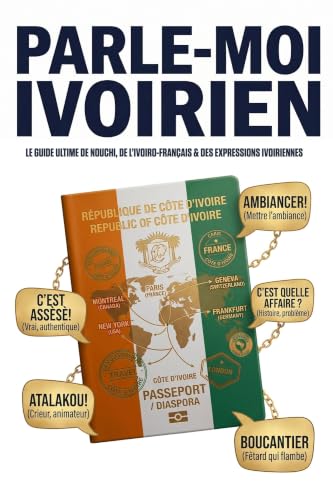
Côte d’Ivoire
Parle-moi ivoirien
Nouchi, Ivorian French and vivid expressions
In Abidjan, a single expression can tell an entire story. Discover the meaning, humour and nuances of conversations, from the neighbourhood to the maquis.
- NouchiA living urban vocabulary and how it is used.
- Ivorian FrenchExpressive turns of phrase and imagery that bring conversations to life.
- ContextClues to understanding when and how to use an expression.
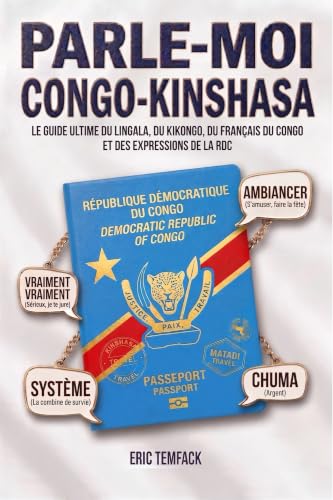
D. R. Congo
Parle-moi Congo-Kinshasa
Lingala, Kikongo and Congolese French
Step into Kinshasa's energy: from everyday conversations to expressions shared in families, music and the diaspora.
- LingalaExpressions and clues to help you follow conversations.
- KikongoAn introduction to words and their cultural context.
- Congolese FrenchThe humour and musicality of language reinvented.

Republic of the Congo
Parle-moi Congo-Mfoa
Congolese Lingala, French and SAPE expressions
From Brazzaville to diaspora conversations, discover a way of speaking where words, style and cultural references respond to one another.
- Congolese LingalaKeys to understanding expressions and their nuances.
- Congolese FrenchThe turns of phrase and imagery of everyday conversations.
- SAPE and cultureUnderstand references to elegance, attitude and social life.
Also read · History and strategy
50 Hidden Laws of African Power
From language to power: another way to read Africa.
Continue your cultural discovery with an exploration of African history, leadership and the dynamics of power.
- History and strategyHistorical lives and principles that shed light on power.
- Leadership and influencePerspectives to inform the thinking of readers and leaders.
- French and EnglishExplore the formats shown in the editions section.
Each title has its own Amazon listing. Formats, any pre-orders and release dates are shown on the book's product page.
04 / The library of laws
Fifty doors.
Law 08 / The long view
Fifty doors.
Step inside.
Explore fifty strategic laws through major figures, kingdoms and movements in African history. The formulations are the author's: they offer perspectives for reflection and political, economic and personal action.
Cultivate the patience of the baobab
Historical reference: Ethiopian resistance
Time is not a river that carries you away, but an ocean you navigate. Learn to wait for the tide.
01—10 Part 1: The foundations of the inner throne
Master the art of personal sovereignty.
-
Affirm your divine origin
Queen Makeda of Sheba and the Ashanti Golden Stool
Lasting power begins with an unshakeable conviction in your right to rule.
-
Forge your legend through deeds
Soundiata Keïta
Let your achievements write your story, turning your vulnerabilities into founding myths.
-
Master the routes of gold and knowledge
Mansa Musa and the libraries of Timbuktu
True wealth controls the flow of goods, ideas and information.
-
Embody a symbol greater than yourself
Osei Tutu I and the Ashanti Kingdom
Unite people around a sacred idea that transcends your individuality.
-
Never define yourself by your limitations
Shaka Zulu
Turn any stigma or perceived weakness into a devastating psychological weapon.
-
Stand at the summit of the mountain
Moshoeshoe I
Choose physical, intellectual or moral ground where your enemies cannot follow you.
-
Become a master of the theatre of power
Queen Nzinga confronting the Portuguese
Stage your authority through carefully chosen gestures, settings and symbols.
-
Cultivate the patience of the baobab
Ethiopian resistance
Time is not a river that carries you away, but an ocean you navigate: learn to wait for the tide.
-
Practise the art of the detour
The tales of Anansi the spider
Reach your goals through cunning, indirect approaches and strategic intelligence, never through brute force alone.
-
Turn iron into gold
The smiths of the Kingdom of Benin
Master technology and the transformation of raw resources into instruments of power.
11—20 Part 2: Strategies of expansion and conquest
Build and sustain an empire.
-
Unite through symbols, govern through institutions
Ghana Empire
Symbols create loyalty, but only lasting institutions ensure longevity.
-
Know when to be the lion and when to be the fox
Sonni Ali Ber
Alternate between absolute terror and pragmatic diplomacy without warning.
-
Reinvent the rules of the game
Shaka Zulu's iklwa
Do not adopt your enemy's weapons; invent your own and make theirs obsolete.
-
Control the river, not just the fish
Swahili merchants
Dominate distribution networks and trade routes, not just production.
-
Make the enemy your student
Samori Touré
Study your opponents' methods, copy their strengths and exploit their weaknesses.
-
Govern through organised mystery
The “silence of gold” in the Ghana Empire
Cultivate a veil of mystery around the source of your power to amplify fear and respect.
-
Use faith as an imperial bond
Ezana of Aksum
A unifying belief can bind an empire more firmly than an army.
-
Isolationism is a double-edged sword
Queen Ranavalona I
Cutting yourself off from the world may preserve your culture, but ultimately weakens you in the face of outside progress.
-
Logistics is the queen of battles
The armies of Monomotapa
An army that does not eat is an army that loses. Master supply and movement.
-
Do not conquer: absorb
The expansion of the Mali Empire
Integrate conquered peoples by offering them a better future within your system.
21—30 Part 3: The arts of resistance and subversion
Defeat a more powerful adversary.
-
Practise flexible resistance
Queen Nzinga over forty years
Alliances are temporary; principles are permanent. Be ready to change the former to preserve the latter.
-
Choose your death
Lat Dior, damel of Cayor
Better a glorious end that inspires future generations than prolonged submission.
-
Resist through the spirit
Cheikh Ahmadou Bamba
Cultural and spiritual resistance can succeed where weapons fail. Win hearts and minds.
-
Exile is a waiting room, not a grave
Patrice Lumumba and his posthumous impact
Even far from power, your idea can continue to grow and threaten the throne.
-
Be as elusive as water
The Jamaican Maroons
Refuse direct confrontation. Use terrain, mobility and surprise to harass a superior enemy.
-
Speak the language of power, but think in your own
Chinua Achebe
Master the oppressor's codes to dismantle them from within.
-
Feigning submission is a form of warfare
The secret societies of the Congo
Appear compliant while organising resistance in the shadows. Time works for the patient.
-
Mobilise the excluded
Yaa Asantewaa
Those whom power ignores are its greatest threat. Give a voice to the voiceless.
-
Make a call that echoes through the centuries
Patrice Lumumba's independence speech
A word of truth, spoken at the right moment, can become a weapon of mass destruction against empires.
-
Live as you teach
Thomas Sankara
Personal integrity and austerity disarm criticism and turn a leader into a living symbol.
31—40 Part 4: Power in the modern arena
Navigate the contemporary world.
-
Control the narrative
Cheikh Anta Diop
Whoever defines origins controls destiny. Win the epistemological battle.
-
The idea must outlive the person
Kwame Nkrumah and Pan-Africanism
Create movements and institutions that embody your vision beyond your lifetime.
-
Imprisonment can be a platform
Nelson Mandela
Turn your cell into a pulpit and your captivity into a moral lesson for the world.
-
Master new territories
Mo Ibrahim and African fintech companies
Identify new battlegrounds, such as technology and data, and conquer them.
-
Build economic walls
Aliko Dangote
Political sovereignty is meaningless without economic independence forged through industry.
-
To educate is to liberate
Julius Nyerere
An educated, critical population is the strongest foundation for lasting power.
-
Reinvent tradition
The Négritude movement
Do not reject the past; reinterpret it to serve the needs of the present and the future.
-
The network is the new kingdom
The African diaspora
Power lies less in controlling territory than in influencing a global network.
-
Be a lighthouse, not an echo
Wangari Maathai
Innovation and original action attract more power than imitating foreign models.
-
Use the system to change the system
Young Senegalese people and civic movements
Use the tools of modern democracy, such as social media and elections, to dismantle corrupt structures.
41—50 Part 5: The traps of power and the laws of decline
Avoid downfall and forge a legacy.
-
Do not confuse the mask with the face
Mobutu Sese Seko
When you start believing in your own persona, you lose touch with the reality of power.
-
Beware the curse of easy wealth
Nigeria and oil
Resources that require no effort corrupt character and paralyse ingenuity.
-
The people are the guardians of your legitimacy
The Arab Spring and Le Balai citoyen
Popular approval is never guaranteed; it must be earned every day through actions, not slogans.
-
The foreign friend is a hidden creditor
Structural adjustment and Françafrique
Outside aid always comes with invisible chains that limit your sovereignty.
-
Paranoia is a prison you build for yourself
Idi Amin Dada
Cutting yourself off from your advisers for fear of a plot is the best way to provoke one.
-
Reckless extravagance heralds the end
Bokassa I
A display of wealth disconnected from people's realities is the prelude to revolt.
-
Neglecting succession sows civil war
Post-independence crises
Your greatest act of power is to prepare your departure and ensure a peaceful transition.
-
Forget the past at your peril
The last Nubian pharaohs
Ignoring the lessons of history and the foundations of your culture leaves you vulnerable to newcomers.
-
Your legacy is your final act of power
Nelson Mandela
How you leave the stage and what you leave behind define you more than your years in power.
-
Become an ancestor in your own lifetime
Traditional sages
Act not for immediate praise, but so that your name is spoken with respect by the next seven generations.
05 / Start exploring
Your next
Your next
starting point.
Three paths into the book's world before you choose your edition.
Understand history
Start with the figures, their lives and their contexts.
Explore the portraits ↗Discover the principles
Browse the fifty laws and their five main parts.
Read the 50 laws ↑Reflect on your practice
Continue reading with reflections focused on action.
Discover the guides ↗
07 / Conversations & speaking
Let's bring
Let's bring
perspectives together.
Author event, interview, conference or professional discussion: tell us about your audience, topic and proposed format.
08 / Useful answers
Before you
Before you
continue.
Who is Eric Temfack?
Eric Temfack is a Cameroonian author and digital strategist based in Paris. He is the author of
50 Hidden Laws of African Power.
Read his biography.
What is the book about?
It explores African history through fifty principles of power, leadership and strategy. Comparisons with the present reflect the author's interpretation.
Which formats and languages are available?
The selection includes French and English editions in paperback, hardcover and Kindle formats.
View all six editions.
Where can I buy 50 Hidden Laws of African Power?
The links on this page open Amazon product listings. Check prices, delivery terms and availability with the seller.
Can I explore the content before buying?
Yes. You can browse
the titles of the fifty laws
and explore the portraits and guides available on this website.
How can I invite Eric Temfack?
Use the
contact page or email
contact@temfackeric.com
. Include your topic, audience, date, location and preferred format.
Where can I learn more about the book in English?
A dedicated page introduces
50 Hidden Laws of African Power
and its editorial world in English.